Guide
How to read an HVAC estimate
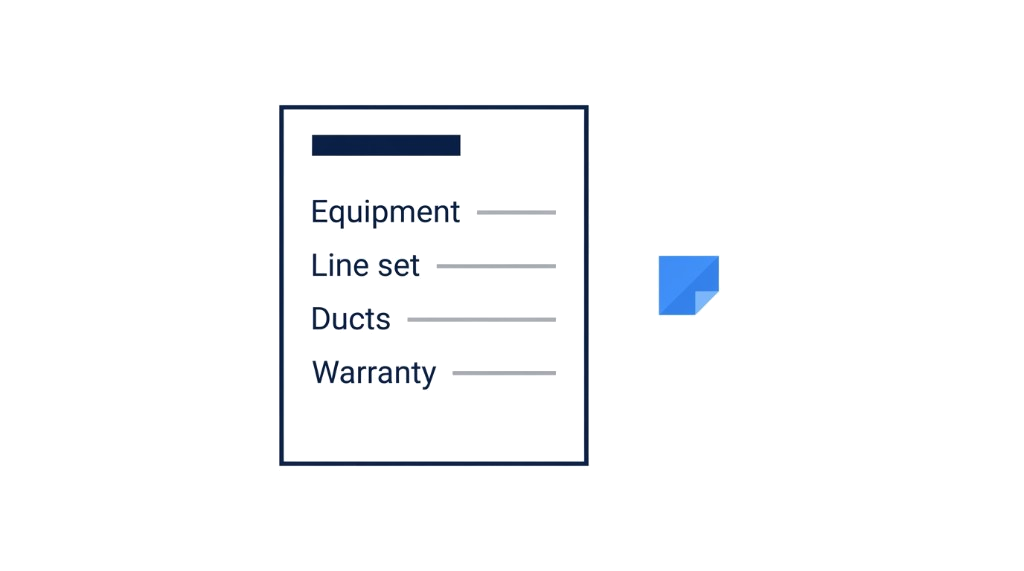
An HVAC estimate is readable when it names the equipment, the size, what is reused, and what is new: line set, thermostat, pad, electrical, ducts, permit, and haul-away. One line that says “system replacement” and a total is not an estimate you can compare to the next bid.
This is a reading aid, not a price check. It will not tell you whether the number is fair for your ZIP or postcode. Two houses on the same street can differ because one needs a new line set, a panel upgrade, or ducts the other bid quietly left out.
Start with the equipment, not the total
A serious line names the manufacturer, the model or series, and whether you are getting a furnace, an air conditioner, a heat pump, an air handler, or a boiler. “High efficiency” is a category, not a product. If the page only says “16 SEER system,” ask for the model number in writing.
In the US, cooling size is usually in tons. In the UK, boiler and heat-pump output is usually in kilowatts. Either way, the estimate should say the size. A bigger unit is not automatically a better bid. An oversized system short-cycles, and you pay for capacity you cannot use.
What a replacement usually includes
If a line is missing, ask whether it is included, reused, or excluded:
- Line set. The pipes between the indoor and outdoor unit. Reusing an old, wrong-sized, or contaminated line set is a common way to cheapen a bid.
- Thermostat. A new system with your old thermostat should say so. A “smart” thermostat that is only an allowance is not a named product.
- Pad, disconnect, and whip. The outdoor unit sits on something, and it needs a safe electrical disconnect. These are small lines that show up later if they were never on the page.
- Flue, condensate, and drain. A high-efficiency furnace or boiler often needs a different vent and a drain. “Existing flue” can mean the new unit is not actually vented correctly.
- Haul-away. Someone removes the old equipment. If it is not on the estimate, it can become a trip charge after the new unit is in.
Ductwork is where the cheap bid hides
New equipment on bad ducts does not fix the rooms that were already hot or cold. The estimate should say whether ducts are included, reused as-is, or excluded. If they are excluded, you still have a duct problem after you pay for the system.
Watch for “modify ducts as needed” with no price. That is the vague line. You want a scope (which runs, how many) or a unit price before they are in the attic.
Electrical is often someone else’s bill
A heat pump or a larger air conditioner can need a new breaker, a disconnect, or a panel upgrade. If the estimate says “electrical by others” or never mentions it, the HVAC total is not the job total. Ask who pulls that permit and who pays the electrician.
On a UK boiler or heat-pump quote, the same question is who is doing the gas, the electrics, and the cylinder or pipe alterations, and whether that person is registered for the work. A number with no named appliance and no note on flue or cylinder work is a total, not a scope.
Warranty is two different promises
The manufacturer warranty covers parts, often only if the unit is registered and installed to their rules. The labor warranty covers the contractor coming back. An estimate that says “10-year warranty” without saying parts or labor, and without saying who registers the equipment, is incomplete.
Ask how long labor is covered, whether refrigerant leaks in the first year are included, and what voids it. A filter you were supposed to change is fair. “We will decide” is not.
Permit and the deposit
Someone pulls the mechanical or building permit, or the job is unpermitted. The estimate should say who, and whether the fee is inside the total. Unpermitted HVAC work shows up when you sell or when you file a claim.
A modest deposit to order the equipment is normal. Half the price before anyone is on site is a lot of leverage to hand over, especially on a custom unit that cannot be returned. Ask for a milestone schedule and a last piece after the system runs, the thermostat is set, and the old equipment is gone.
If they will not itemize
Some contractors send a short number and a longer contract later. Do not sign the short number. Ask for the model, the size, line set new or reused, thermostat, duct scope, electrical exclusions, permit, haul-away, and the labor warranty. If they refuse to separate those, you cannot tell whether the cheap bid skipped the work the other bid included.
An allowance for a thermostat, a pad, or “electrical” is a placeholder, not a price. Ask what it assumes. “As discussed” does not count until it is on the PDF.
Then still get a second bid
Line the two estimates up on the same work: model and size, line set, thermostat, ducts, electrical, permit, haul-away, and labor warranty. The lower total is only cheaper if those lines match.
If you already have the PDF, the free briefing on Explain My Quote will flag vague wording and common gaps in your browser. The file stays on your device on that pass. It will not say the price is fair, and it will not replace a second contractor.
More on the general case: how to read a contractor quote. For a roof, see how to read a roofing estimate.